Tell us about the job
Takes about a minute. No obligation.
A contractor pricing a central AC repair in Simpson County is mostly ruling out weather before they rule anything else in. 72 severe weather events were recorded in Simpson County, Kentucky between 2015 and 2024. At that rate, severe weather is an event here, not a standing condition, and it does not carry the load that explains most compressor failures or refrigerant losses a contractor encounters. Age, installation quality, and how consistently the system has been serviced are what show up in the opened unit. A contractor who treats the weather record as a primary cause is looking at the wrong line.
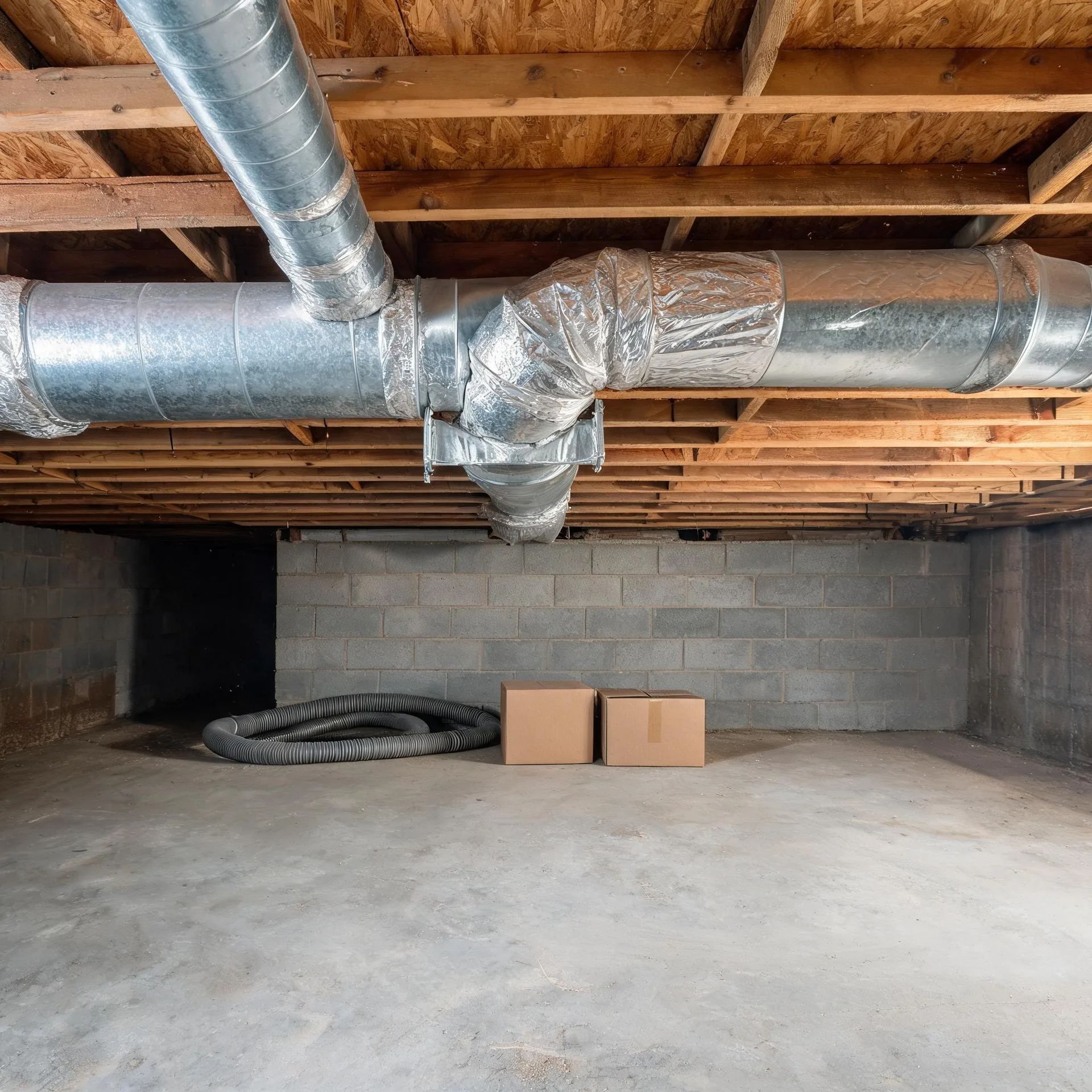
Ductwork in a house this old has usually been patched, rerouted, or left exactly as it was the decade the house went up, and none of that shows until a contractor pulls the panel and traces the system. Half the homes in Simpson County, Kentucky were built in 1979 or earlier (2020-2024 ACS 5-year). That span of time is long enough that a central AC unit a homeowner believes is relatively recent may itself be sitting on a second or third set of components, some of which share nothing with the rest of the system. When a contractor opens a unit here, what they find often determines whether a repair is a parts order or a conversation about what the system can realistically carry going forward.
The Parts of a Central AC a Contractor Checks First
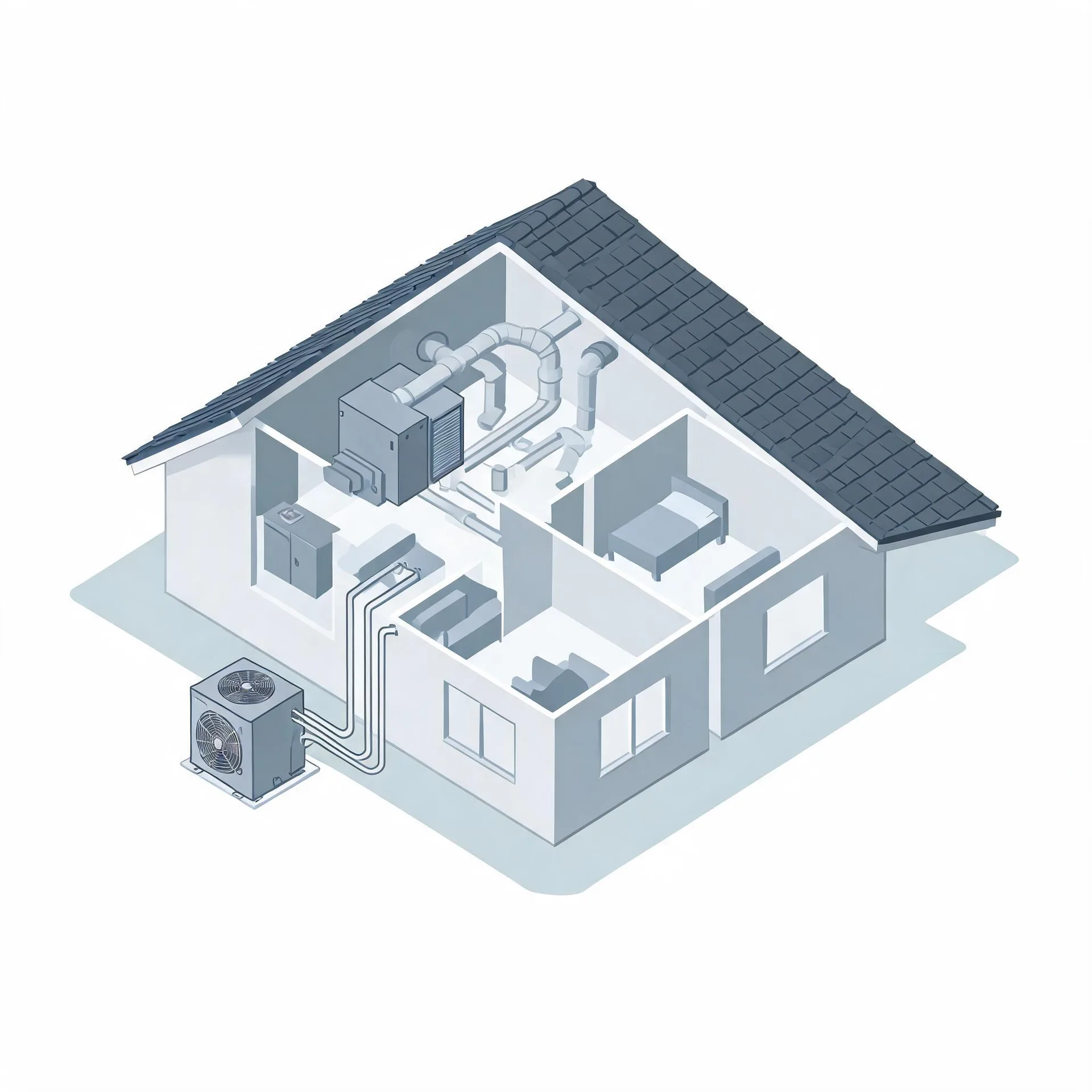
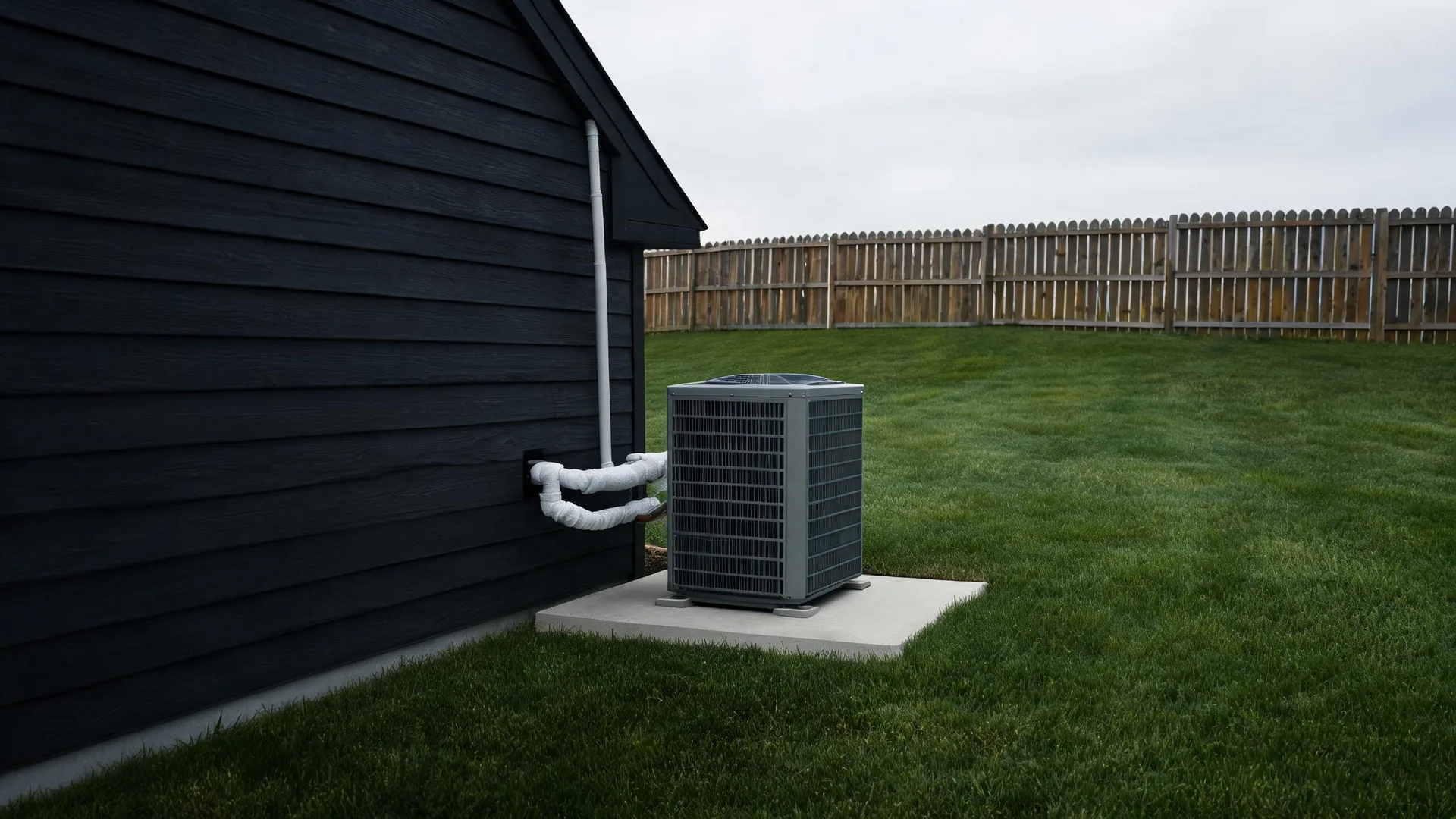
The outdoor condenser unit sits outside the house, usually along a side or back wall, and it sheds the heat the system pulls from inside. The compressor lives inside that cabinet and is often where a contractor starts when the system runs but no longer cools. A refrigerant leak or a failed compressor shows up fast: the air coming from your vents stays warm no matter how long the system runs.
Inside the house, the air handler holds the evaporator coil and the blower that moves air across it. A frozen coil, a failed blower motor, or a clogged drain line all trace back to this unit. The thermostat ties both sides together and is a common first check before a contractor opens anything else.
The drawing shows a typical central AC layout, and a licensed contractor determines which components apply to your specific home.
Get matched in Simpson CountySimpson County by the numbers
72 severe weather events were recorded in Simpson County, Kentucky between 2015 and 2024.
NOAA National Centers for Environmental Information, Storm Events Database, bulk CSV export, events 2015-01-01 through 2024-12-31.Half the homes in Simpson County, Kentucky were built in 1979 or earlier (2020-2024 ACS 5-year).
U.S. Census Bureau, 2020-2024 American Community Survey 5-Year EstimatesSimpson County, Kentucky holds 8,627 housing units (2020-2024 ACS 5-year).
U.S. Census Bureau, 2020-2024 American Community Survey 5-Year EstimatesOwners occupy 66.7% of the occupied homes in Simpson County, Kentucky (2020-2024 ACS 5-year).
U.S. Census Bureau, 2020-2024 American Community Survey 5-Year EstimatesCodes & Standards Behind Central AC Repair in Simpson County, Kentucky9 sourced rules & standards
What HVAC Repair Looks Like in Simpson County
Split-system central air conditioners rated below 45,000 Btu/h manufactured on or after January 1, 2023 must meet a federal minimum of 13.4 SEER2.
Split-system central air conditioners rated at or above 45,000 Btu/h manufactured on or after January 1, 2023 must meet a federal minimum of 13.4 SEER2.
Split-system central air conditioners manufactured between January 1, 2015 and December 31, 2022 had to meet 13 SEER, the metric that preceded SEER2.
Single-package central air conditioners manufactured on or after January 1, 2023 must meet a federal minimum of 13.4 SEER2.
Space-constrained central air conditioners manufactured on or after January 1, 2023 must meet a federal minimum of 11.7 SEER2.
Federal efficiency standards for split-system central air conditioners and heat pumps are set on each certified combination of outdoor unit and indoor coil rather than on the outdoor unit alone.
Residential and light commercial air conditioning and heat pump systems assembled in the field, including mini-splits and unitary systems, may not be installed on or after January 1, 2025 using a refrigerant with a global warming potential above 700.
A field-assembled system whose specified components were all manufactured or imported before January 1, 2025 carries no installation compliance date under the refrigerant restrictions and may still be installed.
Licensing and Legal Requirements in Simpson County, Kentucky
Kentucky requires a licence to practise heating, ventilation and air conditioning contracting: a person may not do the work unless they have met the state licensing requirements.
Severe Weather Events in Simpson County
Extreme weather puts real stress on central AC systems, cycling them hard through heat spikes and power fluctuations that wear components faster than routine use does. How much of that pressure a unit absorbs depends on what the local climate actually delivers, which is why weather history belongs alongside any honest look at repair needs in Simpson County.
72 severe weather events, 2015–2024. Source: NOAA National Centers for Environmental Information, Storm Events Database.